Wednesday, November 12, 2008

God and Grammar


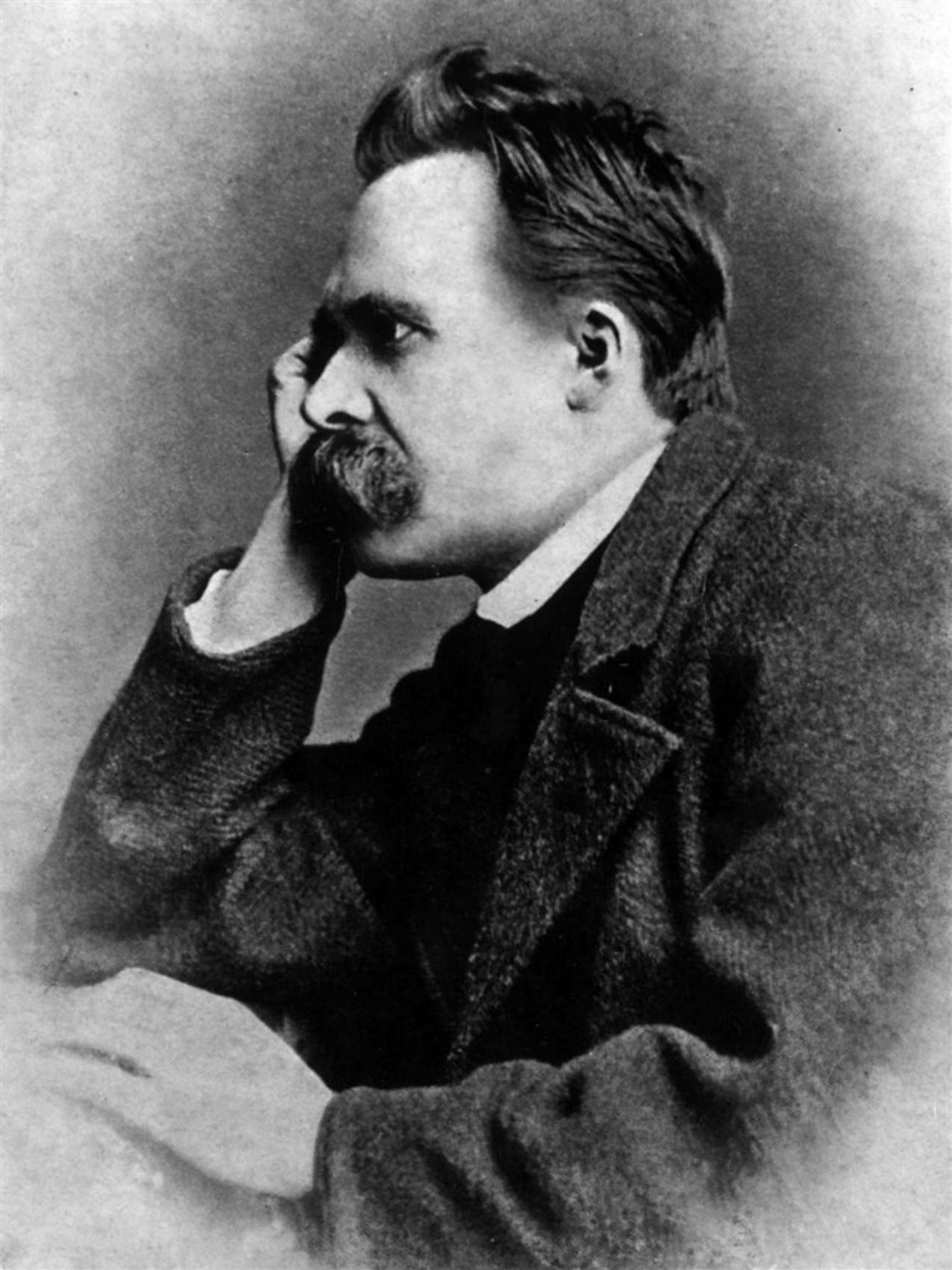
"I am afraid we are not rid of God because we still have faith in grammar" - Nietzsche in 'Twilight of the Idols'

Labels: ,

Saturday, March 29, 2008

Bertrand Russell: A Presuppositionalist?

"All knowledge, we find, must be built up upon our instinctive beliefs. And if these are rejected, nothing is left." - Bertrand Russell in "The Problems of Philosophy"

Here, along with presuppositional Christian apologists, Russell sees that all thinking ultimately leads back to some more basic unproven assumptions. While obviously there is great disagreement about the details (particularly between Russell, and say, a theist), the basic consensus is that all reasoning is circular (for example: you can't successfully rationalize rationality). And hence, everyone can be taken to some unproven leaps of faith. Even rational people. But sometimes we act or pretend otherwise.

Labels:

Saturday, May 05, 2007

Tocqueville on Government, Ecetera

In analyzing the French Revolution, Tocqueville said: "The most perilous moment for a bad government is one when it seeks to mends its ways".

Sometimes the only thing worse than being a miserable failure is being a miserable failure and trying hard to not be one. It becomes a vicious cycle. This not only applies to government, but also to software projects, self-improvement, New Years resolutions, public relations disasters, etc. When we start from a failing base and work towards improvement, we mostly either go nowhere or slide further downhill.

This stems from the fact that something that is wounded or worse yet--dead is unable, or at least unlikely to be able to analyze the situation properly or be able to mend it. And when it does muster some sort of an effort, it is likely to be a frantic over-reaction or misguided reaction like the way twisting and turning in the wrong direction only ensures that the barbs of a hook sink deeper.

We find this echoed also in Biblical thought. Perhaps the most conceptually powerful teaching about the folly of expecting positive from a negative base is in Mat 7:18. Good trees don't bring forth bad fruit, neither do bad trees bring forth good fruit. Unless there is a change to the basic nature of tree, don't expect it to bring forth something completely different. The idea is also further developed in the theological teachings of the Bible in the way it speaks of the fall, sin, and the hope for reform and regeneration. Something flawed can only bring forth something unflawed with external intervention. And while there are interesting theological aspects of this, for now I'm speaking of it semi-generically and also moreso related to things like politics or the conducting of projects.

Now, the concept we've come to in thinking about what Tocqueville said becomes sort of hard to apply practically. Take a system of government. It is such a complex thing. So many factors interacting. Many different people playing into it, too. It isn't easy to change, so it seems the small mending is all that is feasible anyways. Where does one begin when one finds themselves in the middle of a crumbling system? Is the answer always revolution and completely upheaval? How can small and gradual changes for the better ever be successful given what Tocqueville (and common sense) tells us about failing enterprises mending their own ways? Can the system ever change without a thorough ride down shakedown street? Or how about a software project? Should we at the disconcerting sign of failure completely overhaul things ignoring the possiblity of fixing the solution by smalll tweaks? Or even, what about self-improvement? Should we always be looking for some sort of revolutionary approach or huge change of foundation when some "mending" may do? And how can we ever change anything if we are just "inside the system". Then we are always a part of the flawed system and only a true "outsider" could change it.

I think those are questions that naturally flow from the good point that Tocqueville made. The questioned raised should lead us to not take his quote too far. I think it comes down to the fact that we should use what he's said to be suspicious of that sort of mending, but not discount it entirely. And thats the way he intended it, a sort of ironic statement tied to his observations about the French Revolution.

Here are some very general guidelines to avoiding falling into the trap of the bad sort of mending:

1. Think before you mend and proceed slowly. Do be overly reactionary. Don't let patching a sinking (or already sunk) ship distract you from other possibilities, perhaps a life boat hovering close by.

2. Ideas have consequences. The foundational ideas and principles are better to fix than the side effects. Mending and minor changes made under a flawed framework will be more likely to fail, be time consuming, and cause lots of problems. Rather work on mending the foundational things and let that trickle down to the minor things.

3. Motives for mending are important. If you are doing it to save face, its probably better to face the issue individually (or collectively if it is a collective in question) in the immediate and leave the saving face for later. Mends merely done for the public eye tend to be shady and not last very long.

4. Keep the pace and nature of the changes iterative and regularly, not irregular and erratic. Think the strokes of a good swimmer--not the flailing arms of a drowning person. To be manageable, there must be healthy rhythm to change and "fixes" to allow for a proper process of integration and revision.

5. Be open minded about new directions. Give thought to the possibly that the things needed to be mended are a sign that perhaps things need to radically change or the whole thing in question needs to be dropped. Many of us have a (mostly well-intentioned) eagerness to fix things. But what if we are just chasing our tail needlesly?

All these thoughts came out of nothing but a short quote. This is good evidence that reading quotes can be thought-stimulating. Feel free to add anything else.

Labels: ,

Sunday, January 28, 2007

Alienation and Abstraction

Two "A" words, Alienation and Abstraction, really seem to be words that describe much of our existence in a fallen world influenced by post-modernity.

We are around many people, but rarely communicate with any one of them. We have the tools to understand, probe, and examine, but we are fed a steady diet of cold summaries.

Imagine this hypothetical man:

He gets up in the morning on a week day, and quickly moves from one alienation to another. He half-heartedly says goodbye to the wife and kids. The only way he can drag himself to work is to know he is escaping his family. And the only way he can drag himself to his family is knowing he is escaping his work. Both environments are hostile. He could easily be cut off from either one of these environments. The one by a souring relationship and a divorce. The other by a souring economy and a layoff. He has both a job and a family, but at the same time it seems he doesn't have them.

Finally this hypothetical man is done work. He works his way through a crowded street. There are many people just like him, but he feels no reason to care. His eyes darn quickly to avoid eye contact. In his car, he turns on his radio and hears the weather. He hears that there has been 7 inches of snow in the last 24 hours in Colorado, or maybe it was 8. And the Nasdaq is going down too. It doesn't make much of a difference to him. As he leaves his car and heads into his, our hypothetical man's wife gives him a report of the state of affairs. The babysitter can't come until 8pm. Etc. Etc. He half listens to all that while listening to the latest sport scores. He flips the channel and finds that 5 more soliders were killed in Iraq. He's never been there or known anyone who has. 5 deaths don't phase him, nor does the next news blip which states that some 50 people died in an earthquake somewhere out in the East.

That is just small sampling of the alienation and abstraction that your average person goes through in a day.

Ever since the Fall, alienation has been active in just about every relationship that could be imagined. Human-to-human relationships (parents-children, husband-wife, friends, lovers) have had an element of alienation due to sin. But also, the fall also accounts for alienation between man and plants/animals, and even the relationship between animals. It isn't that these relationships have disappeared, but rather that they have been damaged. Even when they are in place, it is easy for a sense of alienation to creep, especially when things are not held in a proper perspective. And I think there are recently developments in culture and technology which pronounce these alienations.

Abstraction may be a little more difficult to pinpoint. There are many levels of abstraction. It isn't always easy to discern them. And abstraction is necessary in all thought, but I'd suggest that at some points, abstraction lets us escape some things that we shouldn't be allowed to escape. A suitable definition of abstraction could be "the act of considering something as a general quality or characteristic, apart from concrete realities, specific objects, or actual instances." Abstraction becomes nasty when we use this tool for condensing and focusing our thought in either a harmful way or use it to escape the reality of our alienation.

This problem is a large problem that can easily be evaded, but not easily resolved. In fact, it will never be resolved as long as we live under the understanding that we are bags of matter and the assumption that there is nothing beyond the material. However, even if we have some of the proper basic building blocks, we need to have a further understanding of the place of humans in this universe, their relation to each other and other creatures, and ultimately their relation to God. If Christianity is true, it must have answers to these sort of things. I believe it does. I think it ultimately comes down to the fact that Christianity alone has a view of the universe which accurately and properly describes the human condition.

I get the feeling that, as correct as our theology may be, a large portion of the evangelical Christian church is furthering this alienation. Instead of skillfully and faithfully holding forth the gospel and carrying out the work commissioned to us as ambassadors for Christ in our unique circumstances, it seems that too often we are only further bringing about the ugliness of the Fall while at the same time at least partially hypocritically proclaiming healing. We are asking people to cross a bridge to our side, but wonder when they point at our side and say "why?" when they see our state of affairs.

What must you and I do, individually, in order to live out a world view which allegedly (as my contention would be) solves the problem of modern man's alienation from each other and God? This is a question that I've arrived at while on vacation, enjoying God's earth, reading, talking, thinking, watching, etc.

Labels: , , ,

Friday, October 20, 2006

Meaningful Living: God, Creation, and Humans

Our own creativity and meaning is ultimately tied to God's activity in creation. At the very foundation of this assertion, lies a chain of incremental propositions about God:

1. He is (God).
2. God created.
3. God created us.
4. God created us in His image.
5. God created us in His image to glorify Him.

The first proposition simultaneously gives us very little information and very much information, in differing senses of course. Saying "He is" is reminiscent of God's name, Yahweh, which essentially means "He is" (3rd person) and also the name He provided to Moses "I Am" (same name, just 1st person). In this statement we infer God's self-existence. We are limited to using a "to be" verb, because no dictionary-style definition that says "God is like unto [noun]" will do justice to the Supereme King of the Universe. This is very meaningful. However, it leaves a lot of questions to the one who has not had any further revelation imparted. It doesn't specify if God always was or if He came into being at some point in time (although Rev 1:8 and other passages in the Bible resolve that question). It doesn't specify what sort of "being" God has. It doesn't specify whether His existence is knowable or personal. These inquiries are not resolved by the statement "He is", but they can be answered with further information (revelation).

The second proposition, "God created", increases our knowledge of him. It informs us that there is some sort of relation between God and matter, and that God is creative. It also implies that God has some sort of purpose, some sort of end in mind, else why would He create? This is key, and it really sets the stage for this series. However, the two word statement before us is also quite vague. It does not specify when God created, if He did so within time that is. It does not specify why He created. It does not specify what He created or how He did it or whether it was performed from something pre-existent. Of course, these questions are answered in some degree through further revelation (in the Scriptures).

The third proposition, "God created us", narrows creation to humanity, so in that sense it is anthropocentric. It presupposes that "we are" and not only that we are limited beings, namely within God's creation, deriving our existence from Him. Notice how it took three propositions for our attention to get to us. First the spotlight is on God. Then it proceeds to His creation in general, and only after that the spotlight focuses to a particular act of creation, the creation of humans. This is wonderful fact of reality which places us in our place and shatters any illusion of human ego=centricism. However, it still leaves a lot unsaid, which again must refer us back to revalation for further details. While the phrase "God created us" gives us some hints as to our relation to God, it doesn't give any further details about how we relate to Him. And it doesn't give any further details as to how we relate to the rest of creation or even what the rest of creation is. And it doesn't give any basis as to why we are different than the other creatures.

The fourth proposition "God created us in His image" is a direct answer to the dilemma which proposition #3 raises, "Should we be distinguished from the other creatures? If so, why?" This is a nagging question and I believe it is so because it is the "achilles heel" in regard to a quest for human significance, purpose, and meaning. If there is nothing which distinguishes us from creation besides an order of magnatutde of skills and knowledge, then why should we experience any greater planes of existence than the most base creatures? And yet, this proposition, too, isn't exactly explicit in all matters. Why would God create us in His image?

The fifth proposition, which ends with "..to glorify Him" is not an exhaustive answer, but it really does address the question which flows out of the fourth, "Why would God create us in His image?" The answer is to glorify Him! This is the loud cry of Rev 4:11.

I'm convinced that in order to have any rational hope to find meaning in life, we must:

A. Have a "universal" big enough to order the "particulars" of our life.
B. Have some balanced way of affirming both the humans place in creation and his/her distinctiveness from the rest of creation.
C. Have some balanced way of affirming both individuality and collectivity in regard to humanity.

I believe the Christian world-view is the only satisfactory solution to A, B & C. Evidence of this is, in my view, that propositions 1-5 satisfy A, B & C. The universal of God's existence, especially His will and the attributes that are revealed about Him in Christianity, is certainly a "universal" large enough to provide order to the "particulars" of life. Man is a part of God's creation, and therefore there is certainly oneness with creation in that sense. Yet, man is given special revelation from God in regard to his special status within creation as an image bearer of God, which gives a durable reason why man can claim distinctiveness from the rest of creation. And the balance between individuality and collectivity can be understood to proced from knowing that God, who formed man in His own image, is triune and relational, thus creating man as relational beings, interconnected and yet distinct from one another. And, through further revelation, we are taught that God deals both with people collectively and individually, speaking both of God's chosen people as a group and God's chosen men and women individually (and this applies to God's enemies as well), hence giving us further reason to have a balanced view of both collective significance and individual significance.

I don't suppose there is anyone who could honestly say that their life always seems to be full of meaning. And at the same token, I think everyone perceives some sort of meaning in their life. If you reject propositions 1 through 5, you will still find meaning in life. But it will likely be elusive, and it will always be to some extent irrational. The same is applicable to those who accept the first few propositions but reject the rest. The one who excepts propositions 1 and 2 (and maybe even 3) but rejects the rest has little advantage over the one who rejects them all. The existence of a "god" who creates but doesn't create us, or a "god" who creates us but not in his image would leave us destitute of the foundations for a meaningful life. Only the existence of a God who has created man in His own image for His glory can allows us to find a rational (non-irrational) basis hope and meaning.

Labels: ,

Wednesday, October 04, 2006

Saturday's Mini Codices

Here is today's installment:

  • Zotero has just gone public--it looks as though it should prove to be an amazing research/citation tool for the Firefox web browser. It only works on Firefox 2.0, though.

  • If you have an IBM/Lenevo laptop, you should check battery bar code here to see if you qualify for the recall due to unsafe batteries.

  • Douglas Groothuis has an interesting post about what he calls Nietzsche's "Argument From Grammar"

Labels: , , , ,

Thursday, September 21, 2006

How To Handle Ethics in Exceptional Cases

I've been listening to Covenant Theological Serminary's course podcast on Ethics, and I've began to take an interest in a certain area of ethics specifically dealing with how one handles conflicting values (the lecture title is Resolving Moral Conflicts, by the way). The example was brought up was whether it was appropriate to use deception (forgery) and lying in order to save Jews during the Holocaust. This, essentially, is a clash of values. In such a rare situation, our values regarding being honest seem to conflict with our values regarding preserving human life.

The professor's lecture covered a number of ways that Christians try to resolve the sort of a dilema. There are many different ways that people try to find this resolution. I want to list and review a few that come to mind (a few of these were mentioned in the lecture).

1. One way which people try to find resolution is by the "tragic" metod. They believe that sometimes we are forced to do something evil/sinful due to lack of other options. In those cases, it is supposed, we must choose the lesser evil. I believe this is not an option as it goes against the grain of the Bible's message on morality, righteousness, and temptation (see I Cor 10:13 on the presence of a way of escape). For people that hold this view, there are essentially two ways to deal with culpibility. Either the person who choses the lesser evil is excused by God because He has so to speak judged that evil on a curve or he/she is held responsible for that choice even though there was no potential "righteous" course of action. Neither of those options are very attractive Biblically or philisophically.

2. Then there is the hierarcial view, which says when faced with an ethical dillema, we must chose the highest absolute. So, the theory goes, if loving ones neighbour is a higher absolute than "Thou shalt not lie", then the higher absolute would win out. From what I understand, Norman Geisler's position can essentially be boiled down to this. The problem with this view is that it seems to lack coherence. If so-called "absolutes" are placed in a hierarchy, then only one of them is truly absolute. An absolute ceases to be an absolute when it can be superceeded by any thing or condition.

These two views are views that some Christians take, although they seem to be lacking/wrong to some extent. They are not quite as bad as "the end justifies the means", but they do have the tendency to lead to a shakey ground for ethics. The lecturer makes a good point in saying that we shouldn't let exceptional cases undermine the bulk of our ethical process, but I do believe we do need to be able to resolve this dilemma of the exceptional cases somehow. What do we do when two absolute values seem to conflict? Is it even possible that we could be stuck between two ethical values? Or is this conflict just a cop-out that people use when faced with having to do with something distasteful?

Would you lie to save a life or stop an atrocity? How can that be reconcilled with obeying God's commandment? Or what about if we have made a vow to do something that is wrong. What do we do, break a vow or do some other wrong connected to fulfilling the vow? I guess this deals with whether we can add additional clauses to the law in emergency situations (ie. add the clause to "You shall not lie" which would allow for lieing in order to protect humans from murders, etc.). Can the law be superceeded in certain exceptional cases if our motivations are rightly focused on justice, mercy, and faithfulness? Perhaps an implicit part of the "absolute" of "You shall not lie" is that there may be some very exceptional cases of distress in which the law does not simply apply. God's intent of "You shall not lie" was that we be faithful in our speech, but what right does a murder have to expect faithfulness of speech when he will use true information to kill? If one can justify killing in self-defence, how can we not justify lying in order to protect a person from a murderer? These are some thoughts that were presented in the lecture. He also presented some Biblical precidents which demonstrate lying, or at least concealment of the truth in exceptional cases where there is a murdererous intent involved (God instructs Samuel to conceal information from a murderous Saul through a cover story in I Samuel, Rahab the Harlot, the Hebrew midwives in Exodus, etc.) The lecturer did mention that Augustine and John Murray (and probably other theologians) exclude the possibility of lying even in exceptional cases.

If we are to exclude exceptional cases, then which ones merit exclusion? And on what basis? That is another complication! Then there is also the matter of what other implications are tied to the lie. What if the lie involves the denial of our Jesus Christ and our relationship with him? The lecturer suggests in that case it could never be justified, as it would involve a denial of the faith.

I think I may have bit off more than I can chew in terms of coming up with a coherent and durable explanation to this.. but I'm trying to do some fresh unhindered unassuming thinking about this. I'm finding it very complicated to have any sort of flexible explanation of how to deal with exceptional cases in ethics. Are there valid exceptional cases that may evade the written form of the law, or is this just a slippery rope that leads to highly situationalised and flismy ethics?

The professor suggests that John Frame's Christian epistimology called "triperspectivalism" can be applied here. It seems pretty good, though probably doesn't resolve everything. It splits up the resolution of moral conflicts into several perspectives that each must be weighed. They are:

1. Existential perspective. Are we sincerely searching for the will of God? Make sure our hearts are right.
2. Normative perspective. The whole teaching of scripture that we bring to bear on the subject, not isolated texts. What is God's purpose, hermenutical process, etc.
3. Situational perspective. All the relevant facts to properly characterise the case. This removes many perplexities that show up in 'moral conflicts', because a great many of them are just due to misunderstandings of the situation.

Hmmm.. I need to think about this some more. But I'm very interested in this. Many other parts of the Ethics lecture seemed sort of dull to me, but this really got me thinking! Does anyone have any thoughts to share? Could you shed some light on this topic?

Labels: ,

Friday, September 08, 2006

Review: Albert Camus and the Minister

"Albert Camus & the Minister" by Howard Mumma (ISBN: 1557252467)

I'm no stranger to reviewing books. I normally find it easy to write a brief one or two assesment of a book. But my feelings about "Albert Camus and the Minister" by Howard Mumma are very complex and I struggle to write a descent review of this book.

The first 90 pages which cover a growing friendship between Camus and Mumma is clearly the most interesting part of the book. The rest is a collection of life experiences that were meaningful to Mumma. These experiences are not dull, but I found them to be a bit disconnected from the first 90 pages. One of the most entertaining points of this book is where Camus asks for baptism, but Mumma rejects it on the grounds that (A) Camus had already been baptised as an infant and (B) he wasn't willing to join the church or make it a public event. He ends up regreting that stand a bit, especially on reflecting on the fact that it was his final meeting with Camus. It was also neat to read about Camus' enthusiasm in studying the Bible.

Mumma holds a view of the Bible which relegates The Fall to allegorical tale and he certainly doesn't have an evangelical view of the inspiration of scripture. While coming from that platform might have made agreement with Camus a bit easier, I believe Mumma would have had some more meaningful answers to Camus' questions if he actually had a view of the Bible which validates using it as an authorative source. In some senses, from a thoroughly evangelical Christian prespective, Mumma wasn't offering Camus something much better than he already had. Sure, Mumma presented some God talk, but did he present the gospel to Camus as something that is "true truth" not just "religious truth"?

I sympathise with the views of other reviewers on Amazon who are quite critical of this book. While I hope and trust Mumma has recorded things accurately, there are a few things which make me wonder. First, some of his recollections (he admits plainly that they are recollections and may not be 100% accurate) portray the conversations as rather simplistic--with most of the dialogs turning out to be more "gentle" and successful from Mumma's perspective than one would expect when an Existentialist and a Christian minister would get together. Second, I don't know enough about Camus to verify it, but some other reviewers bring up interesting comments that Mumma seems to have gotten some of Camus' biographical details wrong. Third, Camus seeking truth is quite believable, but requesting adult baptism? That seems a bit far fetched. As another reviewer noted, it is notable that the accuracy of first 90 pages of the books can not be verified. This problem is further compounded by the fact that Mumma shares that Camus was secretive about it--he requested specifically that his inquiries be kept secret (this make this book a betrayal of sorts).

I will not go to the length to say I think Mumma invented the dialogs (as some reviewers have suggested), but I think I reader should approach it with some caution and be prepared to accept that at the very least some of the dialogs may not have been recorded completely accurately.

So, if you have been following me so far, you should find that my response to this book is both positive and negative. I don't regret having read it, though. The first 90 pages are interesting even if we are to suppose that they are totally fictional. This book might be worth getting if the reviews so far intruige you. I'll just advise you that you shouldn't expect Mumma to be an evangelical nor should you expect any of the recollections in this book to be easily verifiable.

I'm left wondering what would be the outcome if Camus had spent this time with an evangelical (such as Francis Schaeffer or OS Guinness) instead of one who has accepted most of the doctrinal positions of the "liberal" movement.

Labels: , , , ,

Saturday, September 02, 2006

Saturday's Mini Codices

From now on Ι'm going to share a list of interesting things every Wednesday and Saturday. Think of something roughly similar to Tim Challies "A La Carte".

I've already posted Wednesday's installment, now here are the featured blips on the radar screen for Saturday..


  • The Archive.org Way Back Machine is very useful when you want to see what a web site looked like or what content it had back in time. It is accessible from the Archive.org front page.

  • Check out the blog of Douglas Groothuis. Doug left some feedback on my blog one day, and shortly after I was looking at the Philosophy section in Chapters and I found his book "On Jesus" there. I thought that was cool!

  • If you haven't discovered it yet, you should listen to the Men of Whom The World Was Not Worthy series on Archive.org by John Piper. It covers John Owen, Charles Spurgeon, John Newton, etc.

  • For those interested in 1930's films, Archive.org has Rogues Tavern, The Man Who Knew Too Μuch, Shadows Over Shanghai, and Chinatown After Dark

  • For bloggers that use blogging software that doesn't natively support category tags, there is a web-based technorati tag generator.

  • A mockumentary is a fictitious and satirical documentary.

  • I'm seriously considering reading Archive.org's scan of "Mistakes of modern infidels : or, Evidences of Christianity : comprising a complete refutation of Colonel Ingersoll's so-called Mistakes of Moses, and of objections of Voltaire, Paine, and others against Christianity". For more information, see the summary. It does look interesting!! Besides the interesting subject matter, it is also interesting in that it was published in Detroit and dedicated to someone from London, Ontario!

  • Archive.org's scan of "The wars of religion in France, 1559-1576; the Huguenots, Catherine de Medici and Philip II" also looks interesting. Samuel Froehlich (who founded the ACC) was a descendant of Huguenots who fled France.

  • If you haven't noticed, a lot of todays blips are from Archive.org. It's really a fine project that has a plethora of stuff!!

Labels: , , , , , , , , , ,

Wednesday, August 16, 2006

Curious Book

I try to keep an eye open for interesting and cheap books on EBay.

One book definately caught my eye, it is entitled "Albert Camus & The Minister". I don't really know much about Camus, but given what I do know about him, this book kind of tickles my curiosity.

Camus is a existentialist philosopher. The book is a Christian minister recollecting his friendship with Camus. Camus was in a church to hear an organist, and eventualy connects with the author, who was a visiting minister. Interestingly, it appears that Camus requested a re-baptism, but Mumma (the minister) denied his request.

Apparently this book demonstrates one sort of response to existentialism that some Christians have taken.

I really know nothing about this book other than that it sounds interesting. Some readers have heavily thrashed this book in the Amazon.com reviews, but that doesn't reduce my curiosity about it.

Labels: , ,

Tuesday, July 04, 2006

Funny Video

This is a funny video for you soccer/philosophy fans.

http://www.youtube.com/v/xrShK-NVMIU

Special thanks to Michael Haykin for finding this gem on another blog.

Labels: , , , ,

Tuesday, March 14, 2006

Personal Peace & Affluence - Part Three

The Bible gives us some principles, facts, and instructions that help us to embrace a rightful desire to pursue personal peace and affluence, while at the same time giving us a perspective that allows us to maintain a proper balance and not make these things our idols.

Regarding Affluence:

Idea #1: You Are Small, No Matter What Status You Reach

Whatever your status may be in terms of affluence, don't think it entitles you to different treatment. Too often we hang onto our social status as a symbol that sets us appart from others. Before long we become tempted to objectify and reduce other humans to mere objects that exist in our attention merely to meet our needs. This is so opposite what the Bible tells us as to how we should deal with our neighbours.

God sticks up for the disadvantaged ones. In fact, the Bible reveals that God has a special preoccupation with defending and honoring those who fall low on the "social ladder" whether through disadvanage of birth or in other regards.
If we put ourselves above them, we are setting ourselves at odds with God. He will execute justice, and we are acting unwisely if we are so proud as to exalt ourself above others.

"For the Lord your God is God of gods and Lord of lords, the great, the mighty, and the awesome God, who is not partial and takes no bribe. He executes justice for the fatherless and the widow, and loves the sojourner, giving him food and clothing. Love the sojourner, therefore, for you were sojourners in the land of Egypt." (Deuteronomy 10:17-19)

“If among you, one of your brothers should become poor, in any of your towns within your land that the Lord your God is giving you, you shall not harden your heart or shut your hand against your poor brother" (Deutoronomy 15:7)

"The rich and the poor meet together; the Lord is the maker of them all." (Proverbs 22:2)

The weak and beggardly status of all humans before God is a great equaliser. If we pretend this is not so, we are fighting a losing battle and will eventually be humbled. But above and beyond just being equal, we need to reach out to others and help them as needs arise.


Idea #2: It Is Easier to Lose Riches Than It Is To Earn Them

The effort you put into "personal kingdom building" will not necessarily preserve your wealth long term. There is a Proverb which always fascinated me:

"Do not toil to acquire wealth; be discerning enough to desist. When your eyes light on it, it is gone, for suddenly it sprouts wings, flying like an eagle toward heaven." (Proverbs 23:4-5)

This Proverb can not rightfully seen to be discouraging hard work, as the Bible is full of commands and encouragements to be diligent about making a living. However, this Proverb DOES tell us that we need to know when to STOP. If we waste all our time trying to build a hedge around ourselves, we may soon realize that we spent all our time on something that "flies" away with wings quite freely and easily. It is kind of like a parent who toils all day to make a meal for
their family, only to discover that it is gobbled away impatiently within 5 minutes.


Idea #3: You Can Not Fully Anticipate the Future

Try as we may (and as part of our human dominion, we definately should try), we will always be humbled by the fact that we are essentially incompetent when it comes to anticipating the future.

This places us in the position of, after having taking every prudent measure of preparation, resigning to the fact that our worries for tomorrow should be limited because of our limited knowledge. We want to be proactive, but at the same must concede that our finiteness forces us to mainly be reactive.

These truths are sumarized in the Proverb: "Do not boast about tomorrow, for you do not know what a day may bring." (Proverbs 27:1) This concept is also repeated in Matthew 6:24.

We must recognize that God is sovereign, and therefore He gives and takes away." The Lord makes poor and makes rich; he brings low and he exalts." (I Samuel 2:7)


Idea #4: Your Attention Is Limited, Focus On Things That Matter in the Long Run

If we analyize our typical day, we will find that we fret and get stressed out mainly about things that don't matter in the long run. Much of our daily concern deals with things that fade away from significance within 2 or 3 days.

In Matthew 6:25-32, we have a lengthy discourse by Jesus on this. His method of teaching this concept is by outlining that there are more important things in life than the thing we usually fret about. He also shows us that simpler creatures do just fine without worrying about the things that seem to so often grab our nagging concerns. Then, in verse 33, Jesus introduces the crux of the matter. Seek the important things (the kingdom of God) and all the other details of life will work out without the need to inordinately stress yourself out about them.

Some things are for today only, and other things are forever. Which do you suppose are more worthy of your focus?

Labels: , , ,

Monday, March 06, 2006

Personal Peace & Affluence - Part Two

In the last post, I outlined the problems with an unrestrained/unprincipled pursuit of personal peace and affluence. This is absolutely not a simplistic critique of wealth. In fact, in many cases, the middle class of our Western society has proportionally been more surrendered to the vice of excessive reliance on personal peace and affluence than the upper strata of society. For most of the middle class, there is the ability to pursue the "good life" of personal peace and affluence to an extent that can match that of the wealthy in the basics, if not in all the extravagent details.

The answer does not lie in forsaking wealth or private possesions, although some may find that this as the only way they can sever its grasp on them. It is primarily a heart issue, and lies in the depths of our behavior and attitudes. A patch-work solution will not work.

Let's look at a real life example. As the 1960's approached, there was a great deal of excitement. After surviving economic depression and two world wars, North America was ready to bounce back. Great hope was placed in the educational and commercial institutions of the world.

However, the youth of the time began to see a great stench in society and they reacted to it, to the chagrin of their "old fashioned" parents. It was not crime, or drugs, or war (the things usually seen as detrimental to society). It was a different sort of "menace", one which was wrapped in the optimism of the day. It was preceisely that part of the older generation had made "personal peace and prosperity" their idol. In a sense it seemed like it could be justified. Society came out of a difficult period of wars and hardships. It was time to start living the "good life". However, this came at an expense. The people that idolized the "good life" soon fell into a few different pitfalls 1) The society/culture became very plastic/artificial with little compassion. 2) The inordinate desire for a personal peace and affluence often either made Truth a second-rate side-show or completely annihilated it. 3) The supposed Christian and "conservative" values were often just a remnant of the past and a vain empty shell that had no deep grounding in a true Christan worldview. While there was some pretense of a conviction that transcended personal peace in affluence, in many cases that conviction was all but dead.

The generation which brought about the 60's counterculture often detected the hypocracy, inconsistencies, and double standards in their parent's generation. They saw a lot of materialism. Often their parents and teachers gave them this answer to the meaning of life: "Study hard. Work hard. Suceed". The kids rightly contested that there must be something more to life. They saw thats ome of their parents religious and societal standards, while strict, were often a "pie in the sky" sort of thing without a real grounding, mere empty shells that IN PRACTICE were only as good as long as they didn't interfere with the push towards personal peace and prosperity. They wanted something better, but unfortunately they themselves didn't have a sufficient worldview grounding for that either. The flower children of the 60s did construct a culture which did have a few positive aspects which were less materialistic and more thoughtful. However, because of a lack of grounding or durable standard by which to correct the previous generations issues, the 60s movement, in general, merely took the same wrong attitudes that many of their parents had and imported them into a new cultural context and a new insufficient worldview. This was a recipe for disaster and made their "solution" less than a real solution.

What is the solution, then? How do we embrace the rightful desire to pursue personal peace and prosperity, while at the same time maintaining a balance which keeps the greater values intact and restraints this pursuit so it does not turn into idolatry? What principles do the Bible give which gives us critical instruction as to how this balance works? That will be the topic of the next and final part.

Labels: , , , , ,

Sunday, February 26, 2006

Personal Peace & Affluence - Part One

Much of our life is spent trying to build a fence around ourselves. The one who can build sufficient security and stability around their physical lives is seen as having a full life. Going through a risky situation is seen as an occasional necessary evil, but something which generally speaking is avoided.

We call it "the good life" or "personal peace and affluence". This is what we are taught to strive for. It is idealistic, and those who do not live up to it will often live with guilt about not attaining to it. We as a society, as Francis Schaeffer noted, that is sometimes interested only in our personal peace and affluence. We don't care how much other people suffer. We don't care how unproductive we are. We don't care about morals or philosophy or theories. We don't care about social justice. We DO care about our standard of living and we do care about being comfortable.

One of the most notable casualities in an unchecked pursuit of personal peace and affluence is Truth. The Truth must be worth something, it is reasoned, but not to the extent that I would be willing to endanger my personal peace and affluence for it. Hence, this pursuit overshadows the truth, and consequently becomes an idol held at the expense of what is true.

Along with truth, social justice falls. Social justice is important, it is reasoned, but only as long as it plays as a secondary goal that in some way benefits the primary goal, personal peace and affluence. Then social justice no longer becomes a fair thing, but rather a very narrow means of furthering one groups needs only in so much as they play into the benefits of a higher class.

According to the Bible, no temporal thing should usurp eternal truth. And also, it teaches that truth and justice will always be costly, will always involve some sacrifice (John 15:18-20, Luke 14:27-33). If we chose to follow truth only when it leads us within our norms of personal peace and affluence, we are doing a great disservice to the world and secondarily are estranging ourselves from any sort of connection with the truly radical Biblical vision of discipleship.

While the specifics vary from person to person, ultimately you will be required at some point to chose between preserving your personal peace & affluence and going in a path you know is right. Sometimes these two ways can become contradictory.

One particular example comes forward in my mind. In my denomination in the 1960's, an individual left North America to bring the gospel to a particular tribe in Papua New Guinea. His decision was foolish from any perspective which highly exalts perosnal peace & affluence. Nobody in the denomination had done that before, would this be well received? What would his church think? He was a well-to-do nuclear engineer. What would he do if he cut off his income? He had 4 young kids and a wife he was providing for. Moving to another country with 4 kids and a wife, the reasoning goes, would not be wise, especially when you are taking them into an environment that is dangerous, to a people who are essentially still living in some sort of "stone age". There is no way this decision could be wise when evaluated only on the basis of whether it was good for his personal peace and affluence. But there was something else in operation here: The idea that truth, a mission, a vision, etc. were more important than some of the finer details of personal peace and affluence. The individual decided that God could provide some of these temporal things, if only he would be willing to go out on the limb.

It turns out that this was the beginning of an amazing work. A work that still lasts today. God used this individual to reach a tribe with the Christian gospel who hadn't even been reached with just about anything modern yet. They literally were untouched by civillization as we know it. This gospel not only transformed their hearts, but some social practices that were unhealthy and destructive. He was also used to not only translate the New Testament into their language, but actually invent a written form of their language! Now they are a large group of churches with hundreds upon hundreds of believers and all native leadership!

This individual, Victor Schlatter is his name, said the following, and I think it is a good way to conclude this part: "My mother, a hard-pressed widow, taught me that there is a real Jesus. And if He is real, He is worth believing. His principles are worth following--beyond run-of-the-mill church morality and what is comfortable to twentieth century affluent evangelicals." We need to think long and hard... are we willing to pay the price? What is more important: our personal peace and affluence, or Truth, Justice, and Purpose? While I have focused on religious matters in this post, this concept really applies to the whole of life. Are you just going to seek out what makes you comfortable and safe, or are you willing to take risk when necessary?

To be continued..

Labels: , , , ,

Friday, December 02, 2005

Longing for the Transcendental

Society has progressed mightily along the lines of science and technology, breaking new barriers in knowledge and information processing. However, society has not been able to shake off a fascination with the trancedental. In fact, as the 20th century began to close, a renewed interest in spirituality and the "other" began to rise to the surface. The cold, hard rationalism of yesterday swiftly became a thing of the past, being replaced by a renewed interest in the trascedental.

There are clearly two things about this trend that should trouble philosophical materialists, or at least make them think twice before proceeding. First, why, on the foundation of philosophical materialism, should humans be inclined to ponder the supernatural? Second, can it be intellectually honest to claim that ALL reports of supernaturalism which span all human history were fabrications? Surely some of them are forgeries, but can all of them be forgeries?

In ages past, in the times of the witchhunts and such things, some skeptics/rationalists of the day would discount these "curious arts" as the inventions of their persecutors. However, the recent ressurgence in spiritualism calls this explanation in question and forces one to reconsider any such assumption.

The reality we must ultimately accept is this: Man is very religious. Years upon years of new knowledge and advancement will not take that away. It may change who and how he worships, but not the concept of worship and religion, which is so ingrained into the human being.


As a Christian, I must be careful to not fall into two extremes. I believe OS Guinness puts this very well in The Dust of Death when he says: "I would merely say here that, as a Christian, I always attempt to avoid an over-sceptical rationalism on one hand or any premature escape into a magical explanation on the other". Many individuals caught up in the New Age movement are extremely caught up in superstition. Others, often within modernistic Christainity, have become so rationalistic in their thinking that they deny all miracles or supernatural things both in the Bible and in the world around them. Both of these extremes are untenable and ultimately lead to ruin, if consistently lived upon. As Christians we need to be clear that the transcendental is very real. On the other hand, we need to be careful to avoid using the trascendental as a cloak to explain away everything and divorce ourselves from reality.

Humans seem to be wired to worship, and this occurs whether they do so in the context of modern neo-paganism, ancient paganism, or some of the old monotheisms. I don't think this can ever be explained on an evolutionary basis. If we are to assume philisophical materialism, there can be no utilitarian basis for the ultimate religiousness of humans. Religion is not merely a way that some people utilize to control others (as Marx would say), but rather religion seems to be running through our very veins.

The universality of religious devotion does not mean that all religions are equally valid. If we are to have any regard for truth, then the truth claims of each religion must have bearing. And since the truth claims of many religions conflict, we must presume that at least a handful are wrong in their fundamental precepts.

I believe Christianity rigorously answers the most basic questions of human existence. It explains the religiosity of man, and it also explains his fallen station. And it provides a meaningful answer that can provide hope hence balancing the fine line between unfounded optimism and destructive pessimism. I believe Biblical Christianity does answer the dilemas of modern man, and we need to be more bold and ready to proclaim the Gospel because it does speak to the people of our day!

Labels: , ,